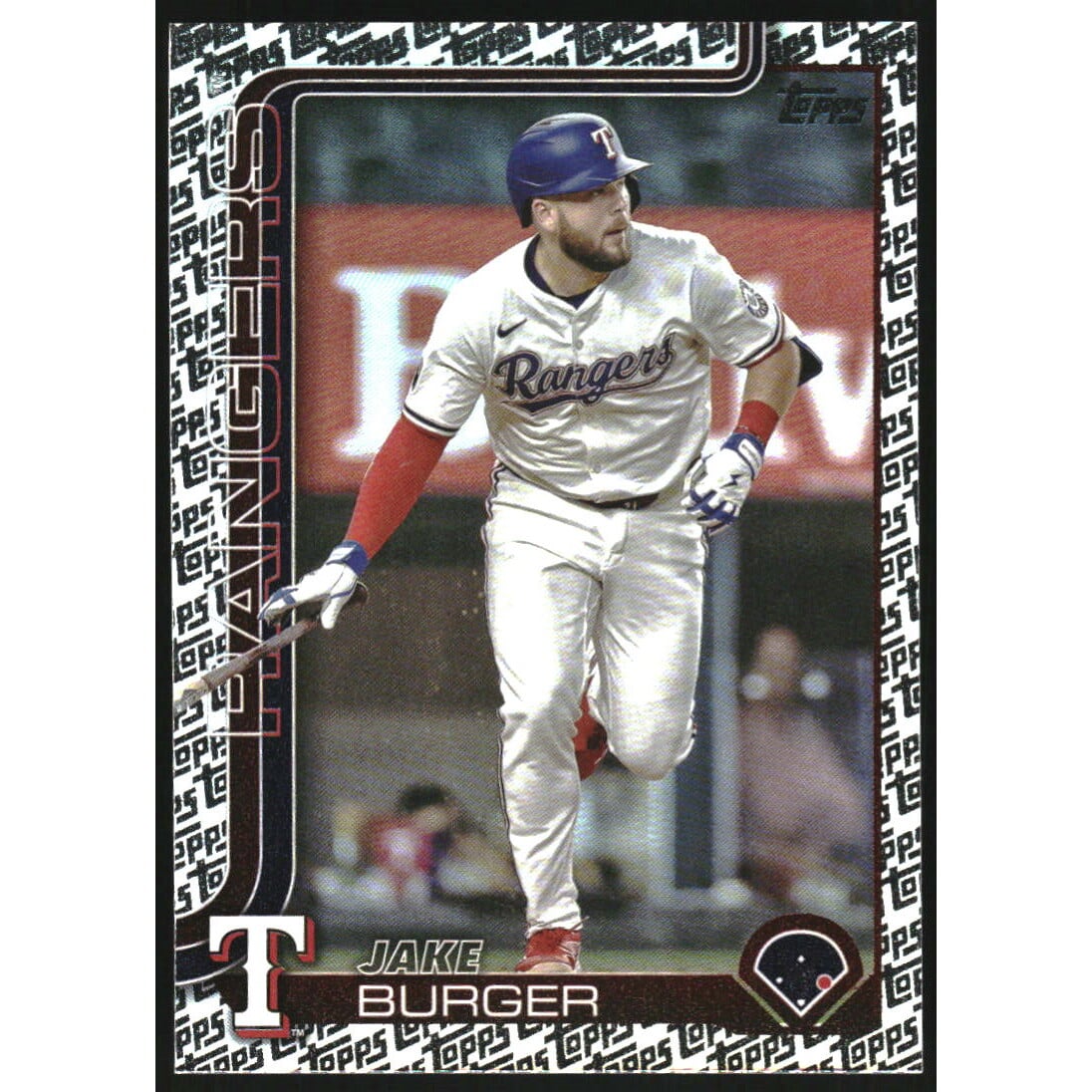
On September 6, 2026, the Texas Rangers beat the Tampa Bay Rays 8-6, a two-run margin that Jake Burger did more to build than anyone else on the field. Burger, Texas's first baseman, hit two home runs in the game, turning a lineup that had been scoring in bumps and starts all night into one that pulled clear for good in the middle innings.
Start with what an ordinary day looks like around the league. On September 6, the average player who saw an at-bat hit about 0.12 home runs — in plain terms, on any given day roughly one player in eight goes deep even once, and the overwhelming majority hit zero. Burger hit two. That production works out to a z-score of 5.56 against that day's full field of hitters, a gap so far outside the normal spread that it belongs in the territory z-scores above 4 usually mark off: a single-game outlier that shows up only a handful of times across an entire 162-game, 30-team season, not something you'd expect even once a week.
Baseball Savant doesn't have exit-velocity or launch-angle readings logged for either of Burger's home runs from this specific game, so there's no pitch-by-pitch forensic file on exactly how hard he hit them. What is on record is his season-long approach: 25 home runs and a .433 slugging percentage against a .239 batting average and 145 strikeouts across 137 games. That's the profile of a hitter who doesn't often hit the ball softly — when he connects, it tends to leave the park rather than become a routine grounder or lazy fly. Two homers in one night isn't a new skill appearing out of nowhere; it's his existing power tool firing twice instead of the usual zero or one, in a game where Texas needed exactly that kind of production to hold off Tampa Bay.
Baseball Savant doesn't have exit-velocity or launch-angle readings logged for either of Burger's home runs from this specific game, so there's no pitch-by-pitch forensic file on exactly how hard he hit them. What is on record is his season-long approach: 25 home runs and a .433 slugging percentage against a .239 batting average and 145 strikeouts across 137 games. That's the profile of a hitter who doesn't often hit the ball softly — when he connects, it tends to leave the park rather than become a routine grounder or lazy fly. Two homers in one night isn't a new skill appearing out of nowhere; it's his existing power tool firing twice instead of the usual zero or one, in a game where Texas needed exactly that kind of production to hold off Tampa Bay.
Zoom out further and the night fits neatly into a career built almost entirely around the long ball. Burger has 113 home runs in 584 career games — a rate of roughly one every five games — with a .245 career average that tracks closely with this year's .239 and 82 RBI. In other words, 2026 hasn't changed who he is as a hitter; September 6 was that same hitter getting two chances to connect in one game instead of stretching them across five separate ones. For a Rangers team that finished 8-6, that cushion mattered, even if the underlying skill on display wasn't new.
Burger came into the game with 23 home runs; the two he hit on September 6 put him at 25 for the season. The thing to watch over Texas's remaining schedule isn't whether he repeats a two-homer game — those are rare by definition — but whether his overall rate holds. If he's still sitting around one homer every five games or so heading into the season's final weeks, this game was simply his established pace compressing into one night. If a long stretch without a homer follows instead, September 6 will look more like an outlier on the far edge of normal variance than a sign of anything changing.
The Rangers already banked the runs. The only open question is which version of Jake Burger — the one who hits two in a night, or the one who goes quiet for two weeks — shows up more often before the season ends.