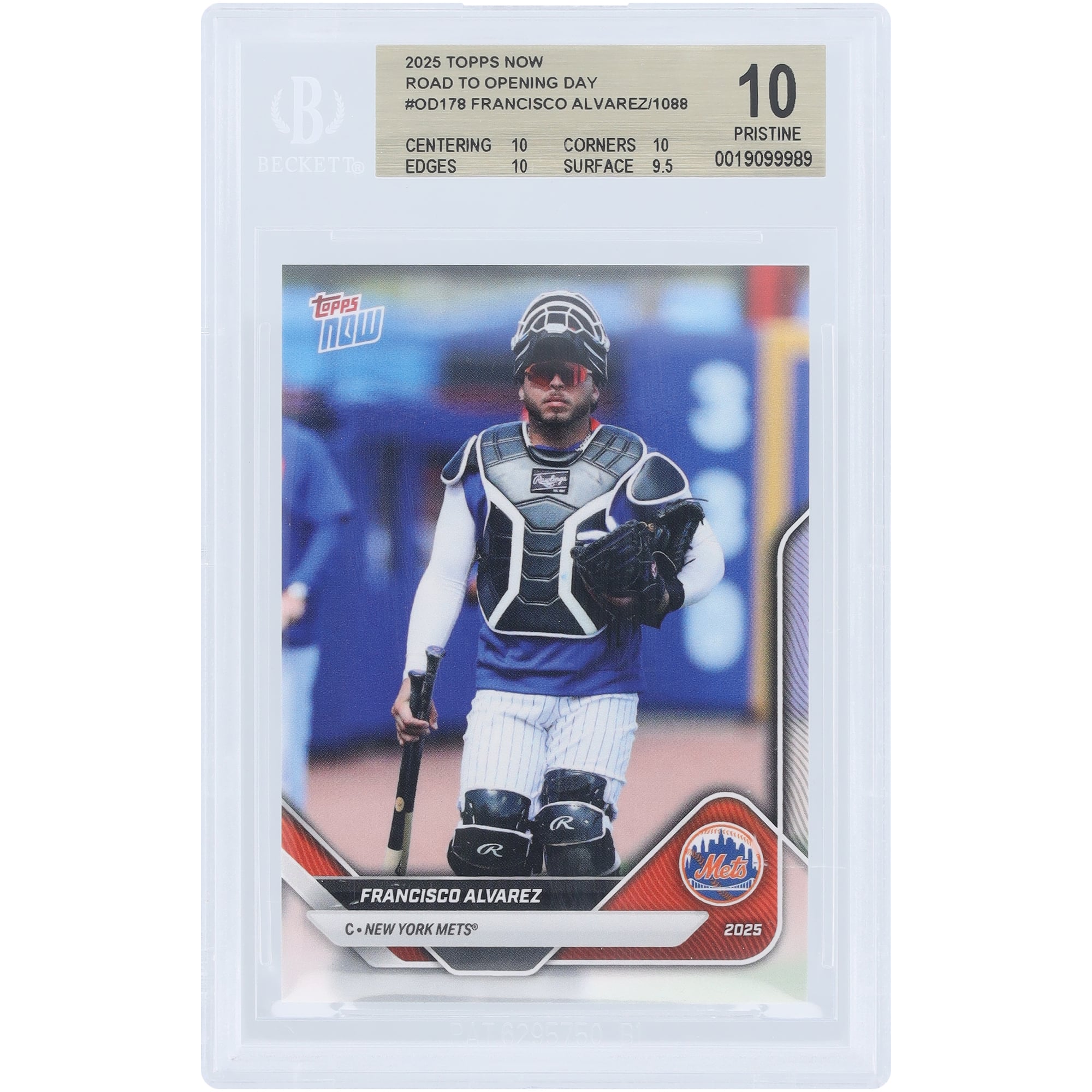
On September 4, 2026, the New York Mets beat the San Francisco Giants 10-6, and catcher Francisco Alvarez put two balls over the fence somewhere in the middle of that scoring. He entered the night with 15 home runs in 99 games. By the final out, he'd matched more than an eighth of that total in a single evening.
Across every player who took the field that day, the average was 0.15 home runs per game — meaning the typical hitter went deep roughly once every six or seven games, if that. Alvarez hit two. That gap between 0.15 and 2 produces a z-score of 4.87, which isn't just an above-average night, it's a performance so far outside the daily distribution that similar games happen something like once every few seasons across the entire league, not just for one player. Put another way: if you watched every game played in a given year, you'd expect to see a night like this maybe once, and some years not at all.
The available data doesn't include pitch-by-pitch or per-homer exit velocity for this specific game, so it's worth being upfront about what we can and can't say about mechanism. What we do know is that Alvarez is a right-handed hitter who, coming into the night, was running a .413 slugging percentage and a .732 OPS over 99 games — a solid but not overwhelming power season for a catcher. Two homers in one game against that backdrop reads less like the extension of an obvious hot streak and more like a discrete event: a couple of pitches that ended up in the right location against a swing built to do damage on contact. Without the batted-ball readings, that's an interpretation, not a certainty.
The available data doesn't include pitch-by-pitch or per-homer exit velocity for this specific game, so it's worth being upfront about what we can and can't say about mechanism. What we do know is that Alvarez is a right-handed hitter who, coming into the night, was running a .413 slugging percentage and a .732 OPS over 99 games — a solid but not overwhelming power season for a catcher. Two homers in one game against that backdrop reads less like the extension of an obvious hot streak and more like a discrete event: a couple of pitches that ended up in the right location against a swing built to do damage on contact. Without the batted-ball readings, that's an interpretation, not a certainty.
Zoom out and the number that stands out is 13 percent — the share of Alvarez's season home run total (2 of 15) that arrived in a single game. For a 24-year-old catcher in his fourth big-league season, durability and power tend to trade off; squatting behind the plate for 130-plus games a year is part of why catcher power spikes often look like this — sudden, concentrated, rather than a steady accumulation. His career line (63 homers, .231 average across 403 games) suggests a player who has always hit in bursts rather than in a smooth, ascending line, and this game fits that pattern rather than breaking new ground.
The next thing worth tracking isn't whether Alvarez keeps hitting two homers a night — nobody does that — it's whether his underlying rate stats move at all over his next 10-15 games. If his slugging percentage ticks up from .413 toward .430 or higher and stays there, this game was the leading edge of something real. If it settles back down near where it was, September 4th was simply a good night for a hitter who has them occasionally, and the ledger evens out the way these things usually do.
Two swings put Alvarez in genuinely rare company for a single day of baseball. Whether they mean anything beyond that day is a question only the next few weeks can answer.