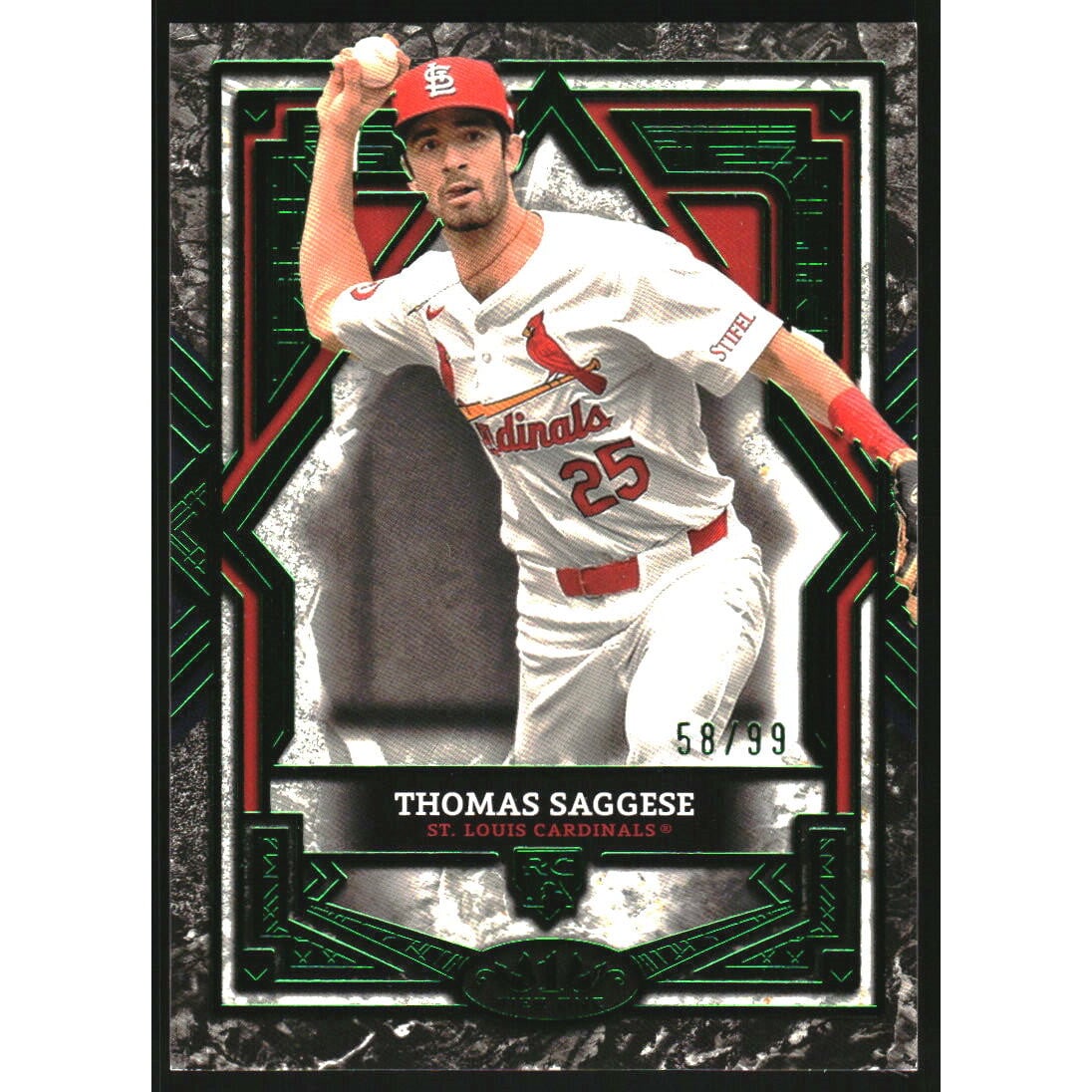
On September 1, 2026, the St. Louis Cardinals beat the Los Angeles Dodgers 13-8 in a game that turned into a slugfest early. Thomas Saggese, a 24-year-old Cardinals infielder hitting .226 on the season, hit two home runs that night — a jump that took him from one home run all year to three, doubling his season total in a single trip through the Dodgers' bullpen.
Two home runs in one game is the headline, but the baseline is what makes it land. Across every hitter who played on September 1, the average home run total was 0.148 per player — meaning the typical lineup spent the day watching balls stay in the yard entirely. Saggese's two homers work out to a z-score of 4.89 against that day's population, a gap that statistically shows up more like once every several seasons across the entire league than something you'd expect from a given hitter in any given year. Layer on his own numbers — he'd hit exactly one home run in the 35 games before this one — and the two-homer night is even harder to file under 'normal Tuesday.'
Statcast's home run log for this game came back empty — no exit velocity, no launch angle on either ball — so there's no way to say precisely how hard he hit them or how far they traveled. What is available is the score: 13-8, 21 combined runs, the kind of final that usually points to shaky pitching on both sides rather than a defensive struggle. Saggese entered the day slugging .381, which isn't the profile of someone pitchers scheme around for power — his career line, a .245 average with six home runs across 135 games, reads like a contact hitter, not a slugger. Two homers landing in a high-scoring, lopsided game fits the shape of mistakes finding a bat that happened to be ready, though without pitch-level data that's an inference rather than a confirmed cause.
Statcast's home run log for this game came back empty — no exit velocity, no launch angle on either ball — so there's no way to say precisely how hard he hit them or how far they traveled. What is available is the score: 13-8, 21 combined runs, the kind of final that usually points to shaky pitching on both sides rather than a defensive struggle. Saggese entered the day slugging .381, which isn't the profile of someone pitchers scheme around for power — his career line, a .245 average with six home runs across 135 games, reads like a contact hitter, not a slugger. Two homers landing in a high-scoring, lopsided game fits the shape of mistakes finding a bat that happened to be ready, though without pitch-level data that's an inference rather than a confirmed cause.
Zoom out and the season around this game looks unremarkable by comparison. Saggese debuted in 2024 and has never posted a power season — a .664 OPS and 27 strikeouts through 35 games this year describe someone fighting to hold a lineup spot, not someone in the middle of a breakout. That contrast is exactly what a 4.89 z-score performance usually means: not a gradual climb, but a single outlier night sitting on top of an otherwise ordinary line. It also means the night barely moves the season numbers that matter most — two homers nudge a .226 average only so far across 35 games of at-bats.
The number worth tracking is his slugging percentage over the next two weeks. He sits at .381 entering September; if his next ten games push that toward .450 or higher, something in his approach or matchups may actually have shifted. If it drifts back toward his career .245 average without another extra-base surge, this game will look like exactly what a 4.89 z-score suggests it is — a two-swing outlier inside an otherwise ordinary season.
For one night in Los Angeles, the math said this basically shouldn't happen. It did anyway — the question now is whether Saggese can make it happen again before the math corrects itself.