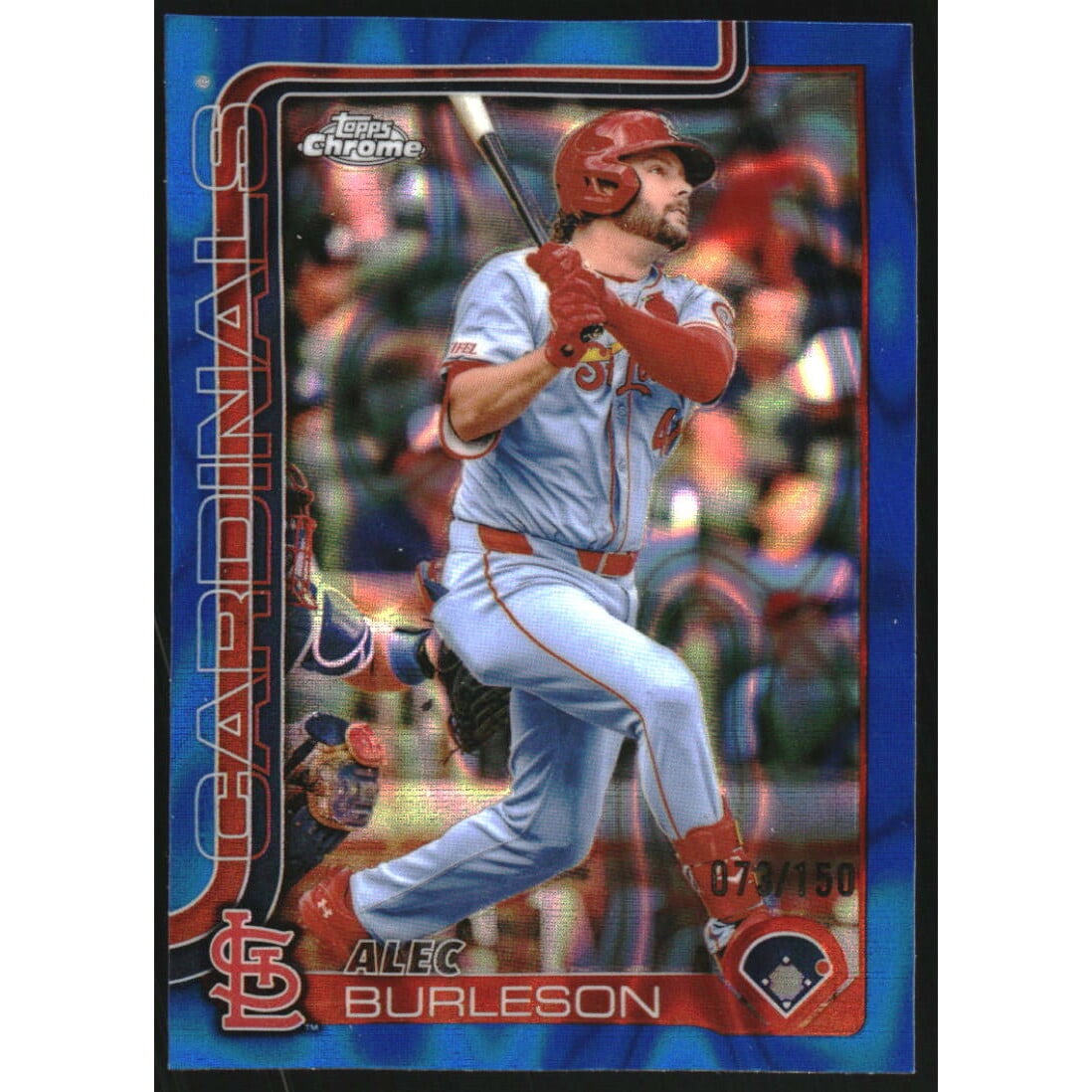
On August 3, 2026, the St. Louis Cardinals beat the New York Yankees 13-7 in the Bronx, a laugher that got out of hand in a hurry once Alec Burleson started connecting. The Cardinals first baseman hit three home runs in that game — a number that, on a normal night around the league, almost nobody reaches.
Across every game played on August 3, the average player who stepped to the plate hit 0.22 home runs — call it about one homer for every five hitters. Burleson hit three in a single game, which works out to a z-score of 5.59 relative to that day's field. A z-score above 4 is the kind of outlier that shows up maybe once every several seasons across the entire league, not something you'd expect to see even from a 30-homer slugger on a given Tuesday. Three-homer games are rare by definition — there are only a handful across all of MLB in a typical year — but the size of the gap between Burleson's night and everyone else's is what makes this one stand out even among three-homer games.
The box score doesn't hand us exit velocity or launch angle on any of the three home runs, so it's worth being upfront: we don't know how hard those balls were hit or where they landed relative to the wall. What we do know is the shape of Burleson's season. He's slugging .480 with an .830 OPS in 112 games, up from a .273 career average to .288 this year, and he's a left-handed hitter who's shown growing pull-side power. Yankee Stadium's short porch in right field has turned modest fly balls into home runs for visiting lefties for a century; without the Statcast detail on these specific swings, that ballpark quirk is a reasonable but unconfirmed piece of the puzzle rather than a proven cause.
The box score doesn't hand us exit velocity or launch angle on any of the three home runs, so it's worth being upfront: we don't know how hard those balls were hit or where they landed relative to the wall. What we do know is the shape of Burleson's season. He's slugging .480 with an .830 OPS in 112 games, up from a .273 career average to .288 this year, and he's a left-handed hitter who's shown growing pull-side power. Yankee Stadium's short porch in right field has turned modest fly balls into home runs for visiting lefties for a century; without the Statcast detail on these specific swings, that ballpark quirk is a reasonable but unconfirmed piece of the puzzle rather than a proven cause.
Zoom out and this fits a player having a quietly strong year rather than a fluke. Burleson entered the day with 18 home runs and 77 RBI, both already ahead of the pace that produced his 66 career homers across parts of four seasons. This is the version of him with the highest OPS and slugging percentage of his career to date. A three-homer night doesn't happen because of one swing adjustment — it's the tail end of a season where the underlying numbers (a .480 slug, 75 strikeouts against a full season of at-bats) already suggested more power than his batting average alone would tell you.
The question now is whether this was a ceiling game or a signal. Watch his next handful of starts: if Burleson's slugging percentage climbs meaningfully above that .480 mark over the next two weeks, this game looks like confirmation of a real power jump. If it settles back down near where it sat before August 3, this was Yankee Stadium, a hot night, and a career day that won't repeat itself for a long time.
Burleson has had good months before. He's never had a night like this one — and the math says he might not have another for a very long time.