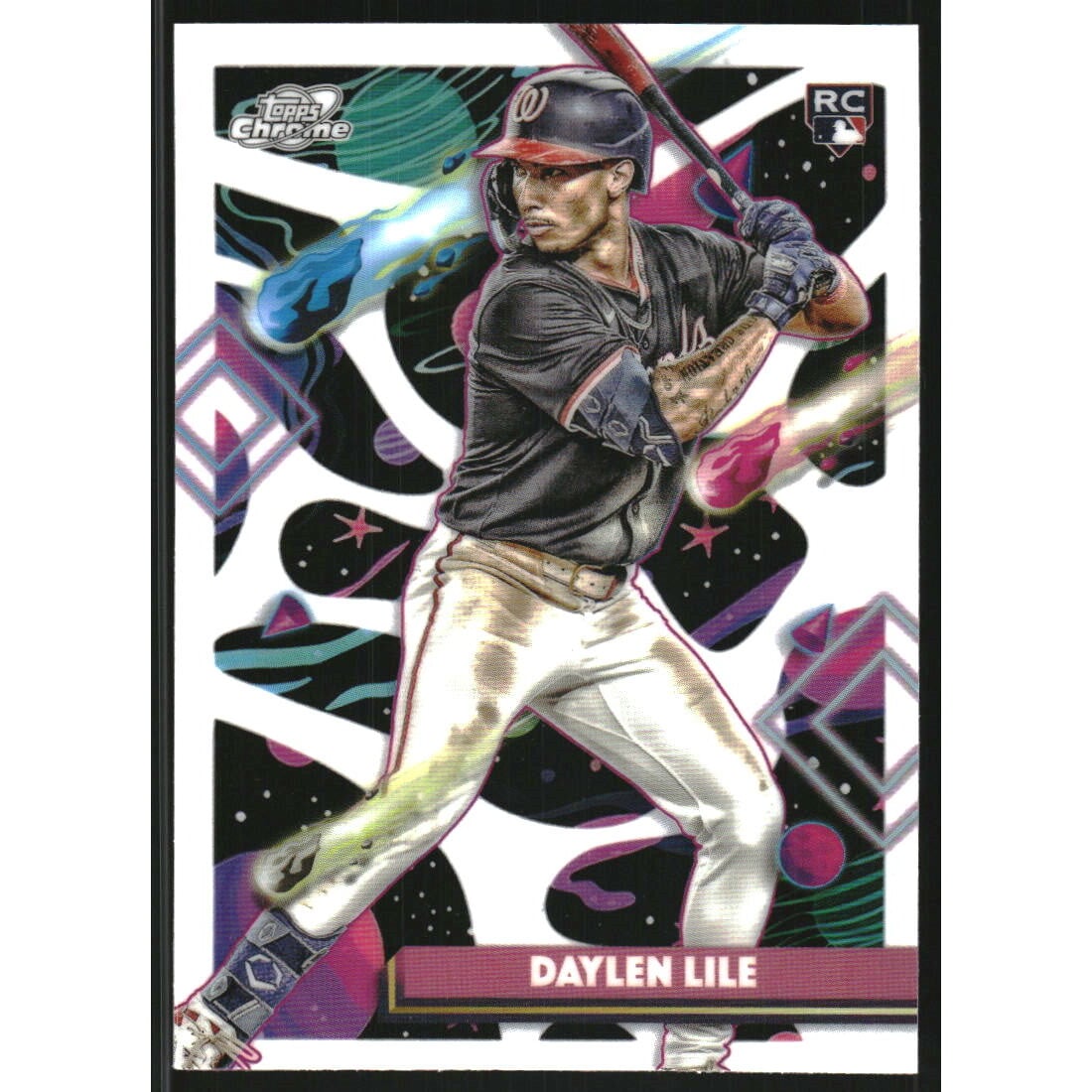
On July 30, 2026, the Atlanta Braves edged the Washington Nationals 5-4, a game decided by a single run in either direction. Daylen Lile, the Nationals' 23-year-old outfielder, hit two home runs in that loss — a power outburst so far outside his usual game log that it barely resembles the same player who came in batting .248 for the season.
Across every game played on July 30, the average position player hit 0.11 home runs — meaning most guys hit zero, and a homer at all was already uncommon. Lile hit two. That gap produces a z-score of 5.76 against that day's league-wide performance, a number so far outside normal variation that percentile talk stops being useful — this is closer to 'happens a handful of times per decade across the entire league,' not something you'd expect to see even once a typical season. For context, Lile came in with 13 home runs in 108 games this year, or about one every eight games. Hitting two in a single night was already a outlier on his own rate before you factor in how rare it looked across the whole sport that day.
Here's the honest limit of what we can say: Statcast's per-homer breakdown for this game — exit velocity, launch angle, the stuff that usually explains a home run mechanically — isn't available for either shot. What we do have is Lile's shape as a hitter this year: a .248 average, a .418 slugging percentage, and 83 strikeouts across 108 games, plus a career line of 22 home runs in 199 games since his 2025 debut, roughly one every nine games. That's a player who makes regular contact but hasn't shown power in bunches. Two homers in one night against Atlanta's staff isn't the signature of a slugger heating up — without swing-level data to point to, the more honest read is that this was a short, unrepeated stretch where contact and location lined up twice in the same game.
Here's the honest limit of what we can say: Statcast's per-homer breakdown for this game — exit velocity, launch angle, the stuff that usually explains a home run mechanically — isn't available for either shot. What we do have is Lile's shape as a hitter this year: a .248 average, a .418 slugging percentage, and 83 strikeouts across 108 games, plus a career line of 22 home runs in 199 games since his 2025 debut, roughly one every nine games. That's a player who makes regular contact but hasn't shown power in bunches. Two homers in one night against Atlanta's staff isn't the signature of a slugger heating up — without swing-level data to point to, the more honest read is that this was a short, unrepeated stretch where contact and location lined up twice in the same game.
Zoom out and this fits the pattern of a young player still finding his level. Lile is in his first full big-league season, running a .717 OPS overall — the profile of a solid everyday piece, not a middle-of-the-order power threat. Nights like this are exactly why teams stay patient with young hitters: the tools flash occasionally, even when the 108-game sample doesn't yet reflect a two-homer-a-night hitter. That Washington still lost 5-4 despite the outburst is its own reminder that one player's rare night doesn't rewrite a game by itself — Atlanta had enough offense and pitching to answer it anyway.
The number worth tracking over Washington's next couple weeks is Lile's slugging percentage, sitting at .418 entering this game. If it climbs and holds above .450 through his next 10-15 games, that's a real signal something changed in his approach or pitch selection. If it drifts back toward .420 by mid-August, this game was exactly what a 5.76 z-score suggests: noise, not a new level.
For one night, a .248 hitter looked like a middle-of-the-order force. Whether that means anything shows up not in this box score, but in the next fifteen games.