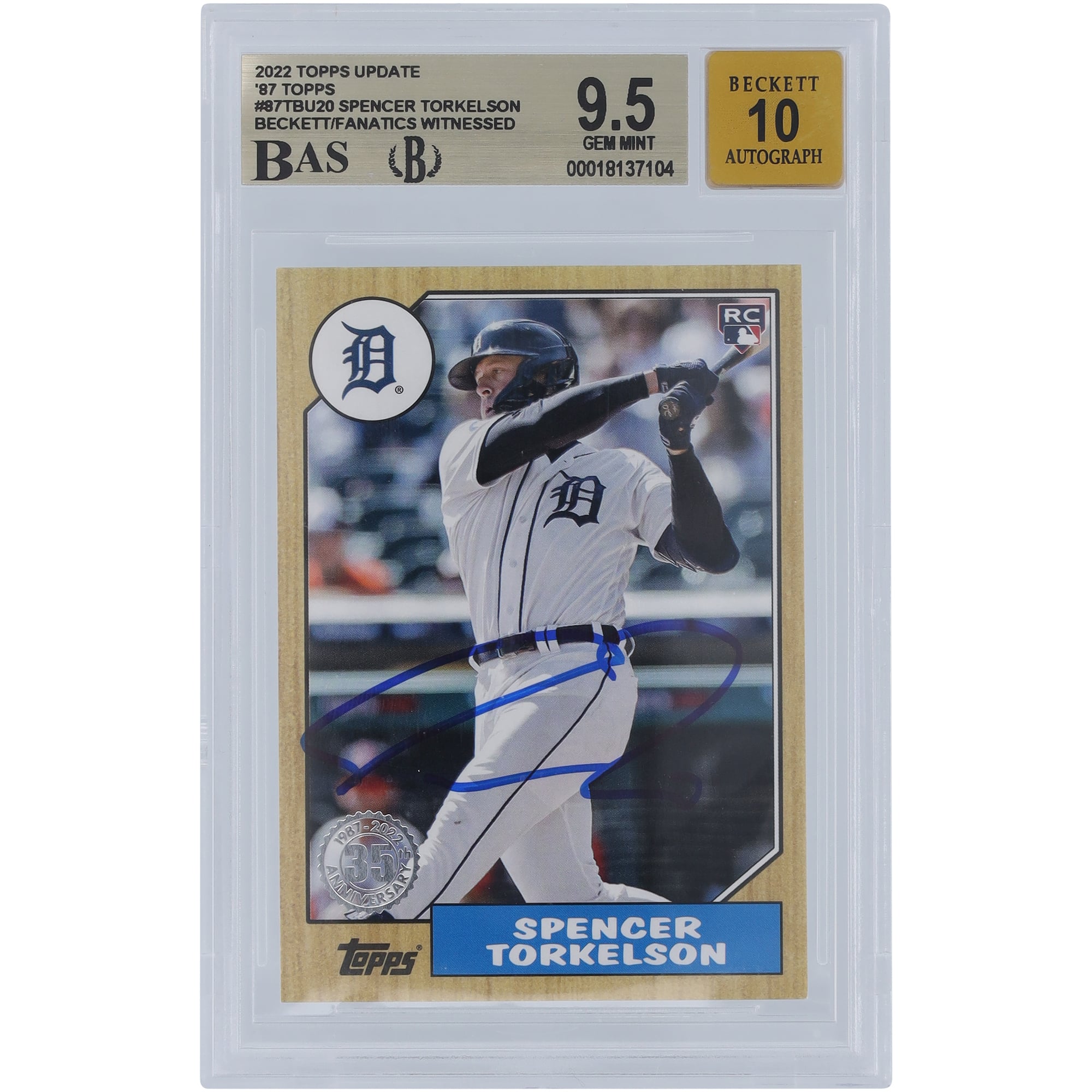
On July 18, 2026, the Detroit Tigers shut out the Los Angeles Angels 7-0 in Anaheim, turning a routine road game into a laugher. Spencer Torkelson, Detroit's first baseman, personally accounted for two of those seven runs with a pair of home runs — a rare power outburst from a hitter whose batting average has sat in the low .200s most of the season.
Across every game played on July 18, the average major leaguer hit 0.13 home runs — meaning most players who stepped to the plate that day went deep zero times, and even a single home run was already unusual. Torkelson hit two. That gap works out to a z-score of 4.93 against the day's overall performance distribution, a number far enough outside the normal range that a single-game output like this — one player that far above the league's daily average — shows up maybe a handful of times across an entire MLB season.
What's harder to pin down is exactly how those two homers left the bat. Statcast's batted-ball breakdown for Tuesday's game — exit velocity, launch angle, the specifics of each swing — isn't available for this particular outing, so there's no basis to call either shot a laser or a squeaker. What we do know from the season-long line: Torkelson is slugging .427 with 18 home runs through 97 games, a power-over-contact profile that's produced a .209 average alongside real thump. Two homers in one night looks less like a new swing than a hitter who regularly trades contact for power connecting twice in the same nine innings.
What's harder to pin down is exactly how those two homers left the bat. Statcast's batted-ball breakdown for Tuesday's game — exit velocity, launch angle, the specifics of each swing — isn't available for this particular outing, so there's no basis to call either shot a laser or a squeaker. What we do know from the season-long line: Torkelson is slugging .427 with 18 home runs through 97 games, a power-over-contact profile that's produced a .209 average alongside real thump. Two homers in one night looks less like a new swing than a hitter who regularly trades contact for power connecting twice in the same nine innings.
Zoom out and the night fits Torkelson's career shape more than it breaks from it. He's hit 98 home runs across 613 games since debuting in 2022 — roughly one every six games — while carrying a career .224 average. This season's 18 homers in 97 games sits right in that historical band, even as the average keeps sliding and the strikeouts pile up: 124 in 97 games, better than one per game played. Detroit's 7-0 win rode that same tension — a lineup that leans on power more than average, getting exactly the kind of carry it needed on a night that mattered for the score, not the story.
The question over the next few weeks is whether this was a one-night spike or something building. Torkelson's .731 OPS this season is propped up almost entirely by slugging rather than average. Watch his strikeout rate over his next ten games — if it holds near the pace that's already produced 124 strikeouts in 97 games, this two-homer night will look like exactly what it probably is: a power ceiling showing up for one game, not a change in approach.
Two home runs don't fix a .209 average. But for one night in Anaheim, nobody in Detroit's dugout was thinking about that number.