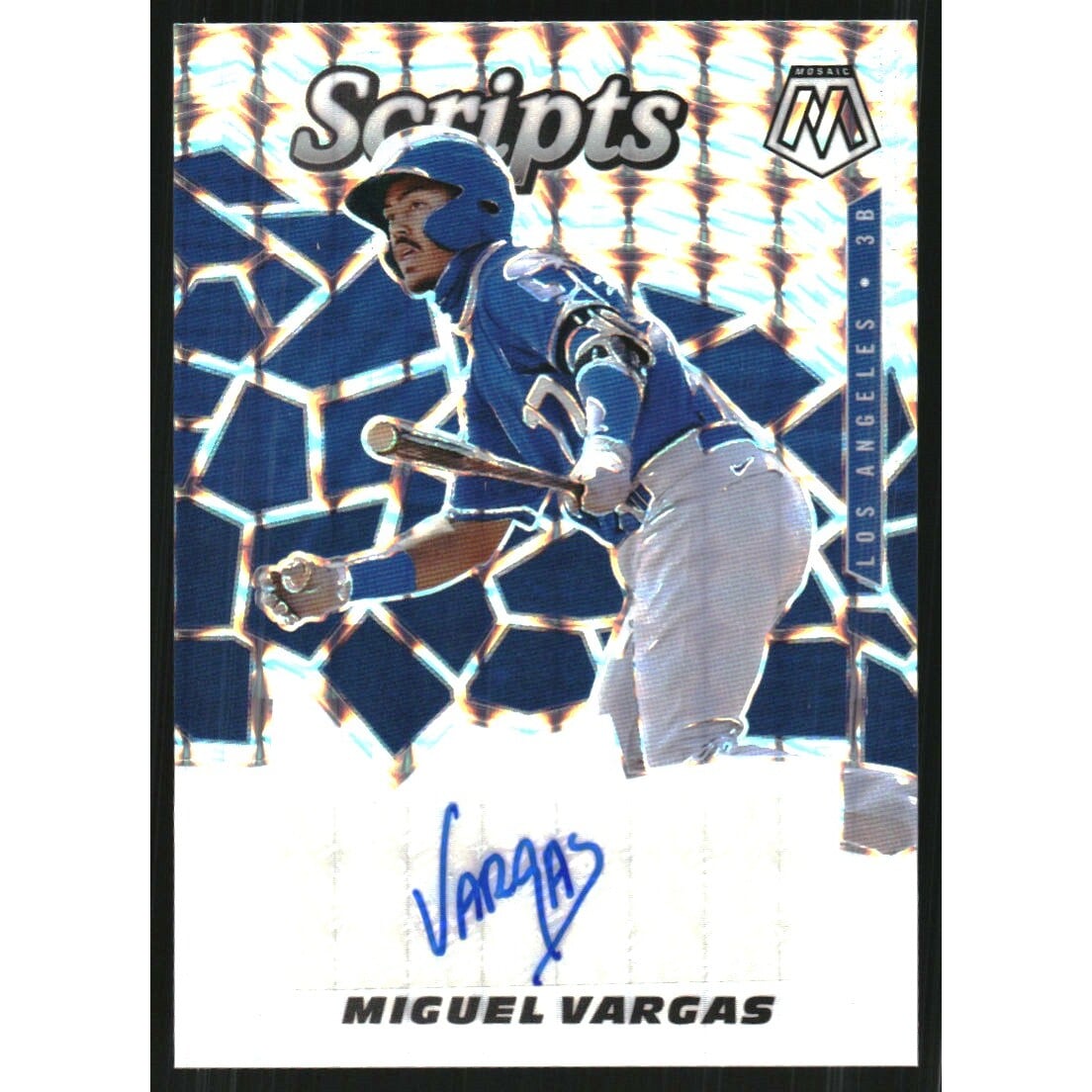
On August 14, 2026, the Chicago White Sox beat the Detroit Tigers 9-5 on the road, and third baseman Miguel Vargas supplied the swings that turned a close game into a comfortable one. Vargas hit two home runs in the win — a performance that, measured against every other player who took the field that day, ranks among the most statistically extreme individual games of the season.
On the day Vargas went deep twice, the average major-league player picked up about 0.14 home runs — meaning the typical hitter across both lineups that day didn't homer at all. Vargas's two homers put him 5.07 standard deviations above that day-wide average, a gap that statisticians would call essentially off the charts. A z-score above 4 already covers only the rarest performances of a full season; at just over 5, Vargas's night sits in a tier the entire league produces only a handful of times across an entire year.
The per-pitch data for Vargas's two home runs — exit velocity, launch angle — wasn't captured for this game, so there's no play-by-play breakdown of exactly how hard each ball left the bat. But the season-long shape of his contact quality offers a real clue as to why a night like this was possible. Vargas's hard-hit rate this season sits at 61.8 percent, meaning well over six of every ten balls he puts in play travel at above-average exit velocity. That kind of profile doesn't guarantee a two-homer game on any given night, but it does mean the raw power to produce one is present far more often than the box score usually shows.
The per-pitch data for Vargas's two home runs — exit velocity, launch angle — wasn't captured for this game, so there's no play-by-play breakdown of exactly how hard each ball left the bat. But the season-long shape of his contact quality offers a real clue as to why a night like this was possible. Vargas's hard-hit rate this season sits at 61.8 percent, meaning well over six of every ten balls he puts in play travel at above-average exit velocity. That kind of profile doesn't guarantee a two-homer game on any given night, but it does mean the raw power to produce one is present far more often than the box score usually shows.
Zoom out and the two-homer game looks less like an isolated fluke and more like the loudest data point in a season-long trend. Vargas has hit 58 home runs across 442 career games — and 29 of them, exactly half his career total, have come this season alone. His .249 average and .855 OPS this year both sit well above his .219 career mark, the signature of a player whose underlying production has genuinely shifted rather than someone riding a hot week. A two-homer night fits naturally into that arc rather than standing apart from it.
The number worth watching now is that hard-hit rate. If it holds anywhere close to 61.8 percent over Chicago's next couple of weeks, the Detroit outburst will look like the natural byproduct of real, repeatable contact quality. If it drifts back toward league-average territory, this game will look more like one of those nights that only lines up a handful of times a year — memorable, but not predictive of what comes next.
A five-standard-deviation night doesn't happen by accident twice in a season — the next few weeks of contact data will show which version of Miguel Vargas actually showed up in Detroit.