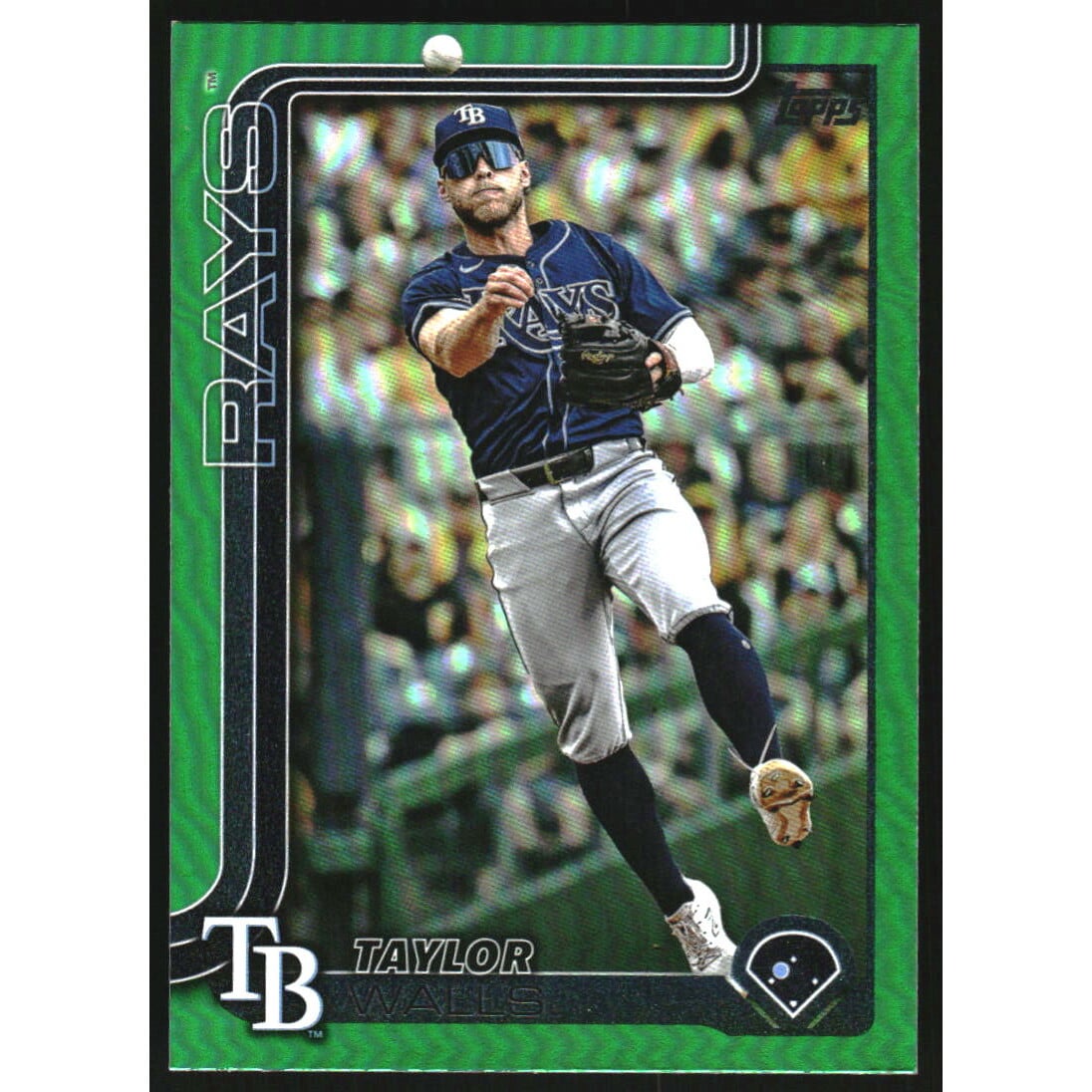
On August 11, 2026, the Tampa Bay Rays routed the Athletics 12-4 in Oakland, and the most improbable line on the box score belonged to shortstop Taylor Walls. Walls entered the game with zero home runs in 97 games this season. He left it with two, both landing in the same nine innings that buried Oakland's pitching staff under a dozen runs.
Across all of MLB that day, the average player hit 0.14 home runs — roughly one every seven games played. Walls hit two in a single afternoon. That gap produces a z-score of 5.14, a number that blows past the usual benchmarks: a z-score of 3 is already rare enough to happen about once a season league-wide, and 4-plus typically describes something that shows up once every several seasons. A 5.14 sits further out than that — the kind of gap a league statistician might see a handful of times across an entire decade, not a single year. His season totals now read 2 home runs in 97 games, meaning this one game accounts for the entirety of his 2026 power output.
Statcast doesn't have exit-velocity or launch-angle readings logged for either specific home run from this game, so there's no way to say precisely how hard he hit them. What we do have is his season-long batted-ball profile, and it doesn't look like a power hitter's: a 61.4% hard-hit rate paired with a barrel rate of just 0.06%. In plain terms, Walls squares up pitches with real force fairly often, but he almost never produces the specific combination of exit velocity and launch angle Statcast classifies as a 'barrel' — the shape of contact most likely to clear a fence. Two homers from that kind of profile point toward mistakes getting turned into souvenirs rather than a mechanical change unlocking new power. The final score matters too: a 12-4 rout built on a dozen Rays runs suggests Oakland's pitching had a rough day broadly, not one isolated to Walls.
Statcast doesn't have exit-velocity or launch-angle readings logged for either specific home run from this game, so there's no way to say precisely how hard he hit them. What we do have is his season-long batted-ball profile, and it doesn't look like a power hitter's: a 61.4% hard-hit rate paired with a barrel rate of just 0.06%. In plain terms, Walls squares up pitches with real force fairly often, but he almost never produces the specific combination of exit velocity and launch angle Statcast classifies as a 'barrel' — the shape of contact most likely to clear a fence. Two homers from that kind of profile point toward mistakes getting turned into souvenirs rather than a mechanical change unlocking new power. The final score matters too: a 12-4 rout built on a dozen Rays runs suggests Oakland's pitching had a rough day broadly, not one isolated to Walls.
Nothing about Walls' track record predicts this. In 577 career games he's hit 24 home runs — about one every 24 games — while a .198 career average has kept him in lineups mostly for his glove at shortstop. This season was tracking the same way before Wednesday: a .216 average, a .605 OPS, and no home runs through 97 games. That means one game supplied his entire year's home run total, in a contest his team won by eight runs against a division rival. It's not the start of a new chapter in his scouting report so much as a single box score that will sit alone as an outlier when his 2026 numbers get totaled up.
The specific thing to watch: does Walls hit a third home run before the season ends, or does this game stand as his full power output for 2026? Also worth tracking is his hard-hit rate over the next two weeks — if it holds near 61%, it suggests real bat speed behind the surprise; if it drifts back toward league-average contact quality, this game looks more like variance finding him twice in one afternoon.
Somewhere in Oakland's bullpen log, two pitches to Taylor Walls are filed under 'mistakes.' For Walls, they're filed under 'season total.'