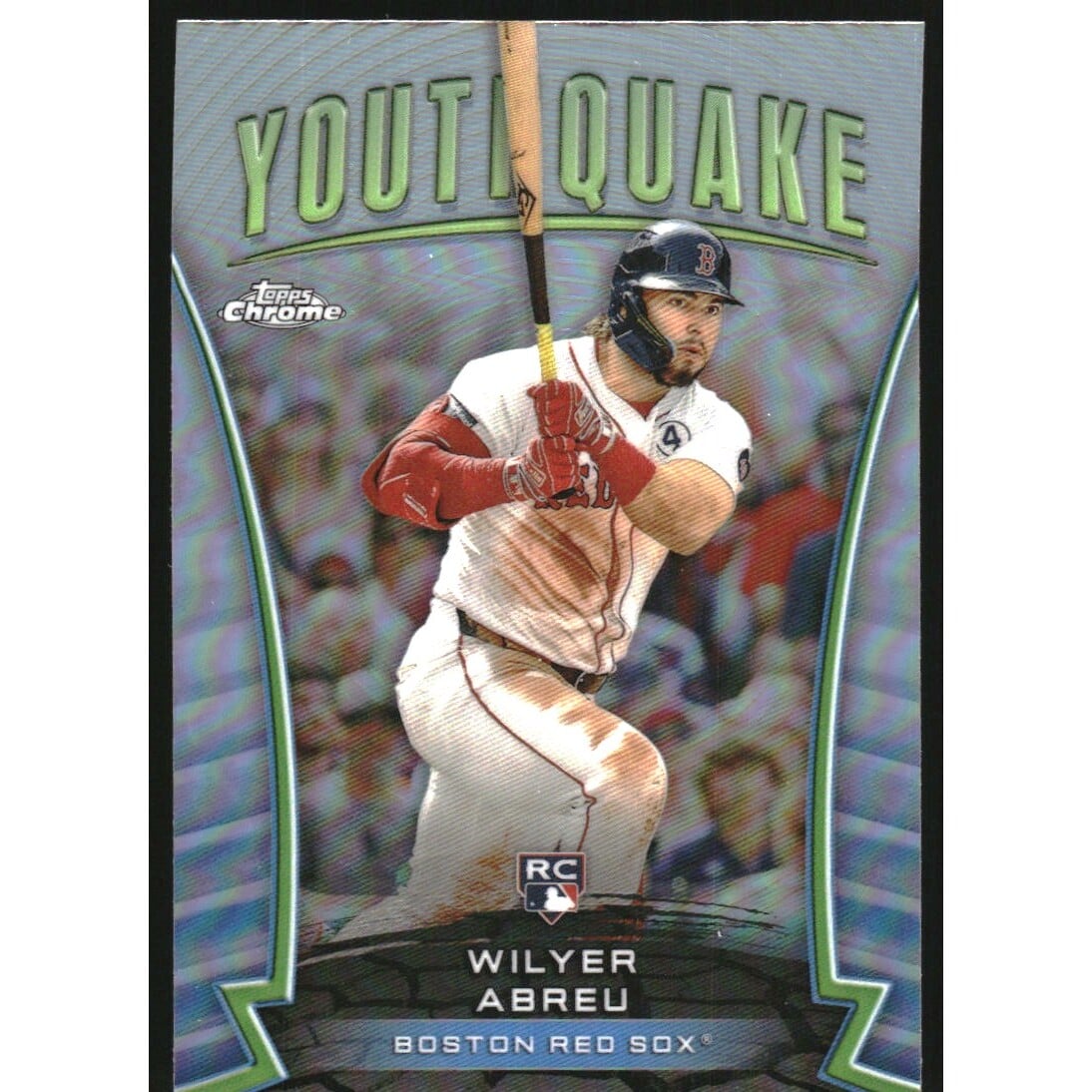
On August 4, 2026, the Boston Red Sox routed the Chicago White Sox 14-2, and Wilyer Abreu supplied two of Boston's home runs in the rout. The game was already lopsided by the time Abreu went deep twice, but doing so put him in territory almost no hitter reaches on a given day — a two-homer game against a league-wide average of roughly one-tenth of a home run per player.
Start with the baseline: across every player who took the field on August 4, the average was 0.12 home runs — meaning most players hit zero, and the handful who homered mostly hit one. Abreu hit two. That gap between 0.12 and 2 produces a z-score of 5.57, which is well beyond the z=4 threshold that already describes a once-every-few-seasons event under a normal statistical model. Two-homer games obviously happen more often in real baseball than a clean bell curve would predict — hot streaks and short-series matchups aren't random noise — but the size of this number tells you Abreu's night sat far outside the range of an ordinary Tuesday for the average major leaguer.
The play-by-play Statcast detail on these two specific home runs — exit velocity, launch angle, pitch type — isn't available in this dataset, so it's worth being upfront about what we can and can't say about mechanism. What we do know from the box score is the shape of the game: Boston scored 14 runs total, which points to a Chicago pitching staff that struggled broadly that night, not just against Abreu. A rout of that size usually means multiple hitters found the barrel, and Abreu happened to be the one who did it twice.
The play-by-play Statcast detail on these two specific home runs — exit velocity, launch angle, pitch type — isn't available in this dataset, so it's worth being upfront about what we can and can't say about mechanism. What we do know from the box score is the shape of the game: Boston scored 14 runs total, which points to a Chicago pitching staff that struggled broadly that night, not just against Abreu. A rout of that size usually means multiple hitters found the barrel, and Abreu happened to be the one who did it twice.
Abreu came into the night with 19 home runs in 110 games this season — a .452 slugging percentage and .776 OPS that put him in solid everyday-power territory, but not the kind of pace that produces two-homer nights often. At roughly one home run every six games for most of the year, this outing represented a sharp spike relative to his own established rate, not just relative to the league that day. He's 27, in his fourth big-league season, with a career line of .254 and 58 homers across 385 games — a player who has generally hit for modest averages while providing pop, and this game fits that profile even as it outpaces it.
The question worth tracking over Boston's next several games is whether this was an isolated burst or the start of a hotter stretch — specifically, does Abreu's home run total move meaningfully past his current pace of roughly one every six games over his next ten starts? If he homers again within the next week, it's worth revisiting whether something about his approach shifted; if he goes quiet for a stretch, this game stands as a one-night outlier inside a solid but unspectacular power season.
Two homers in a 14-2 blowout won't rewrite Abreu's season, but the math behind that night says it was one of the rarer individual performances the league produced all day.